Design Flow: How the Lesson Progresses
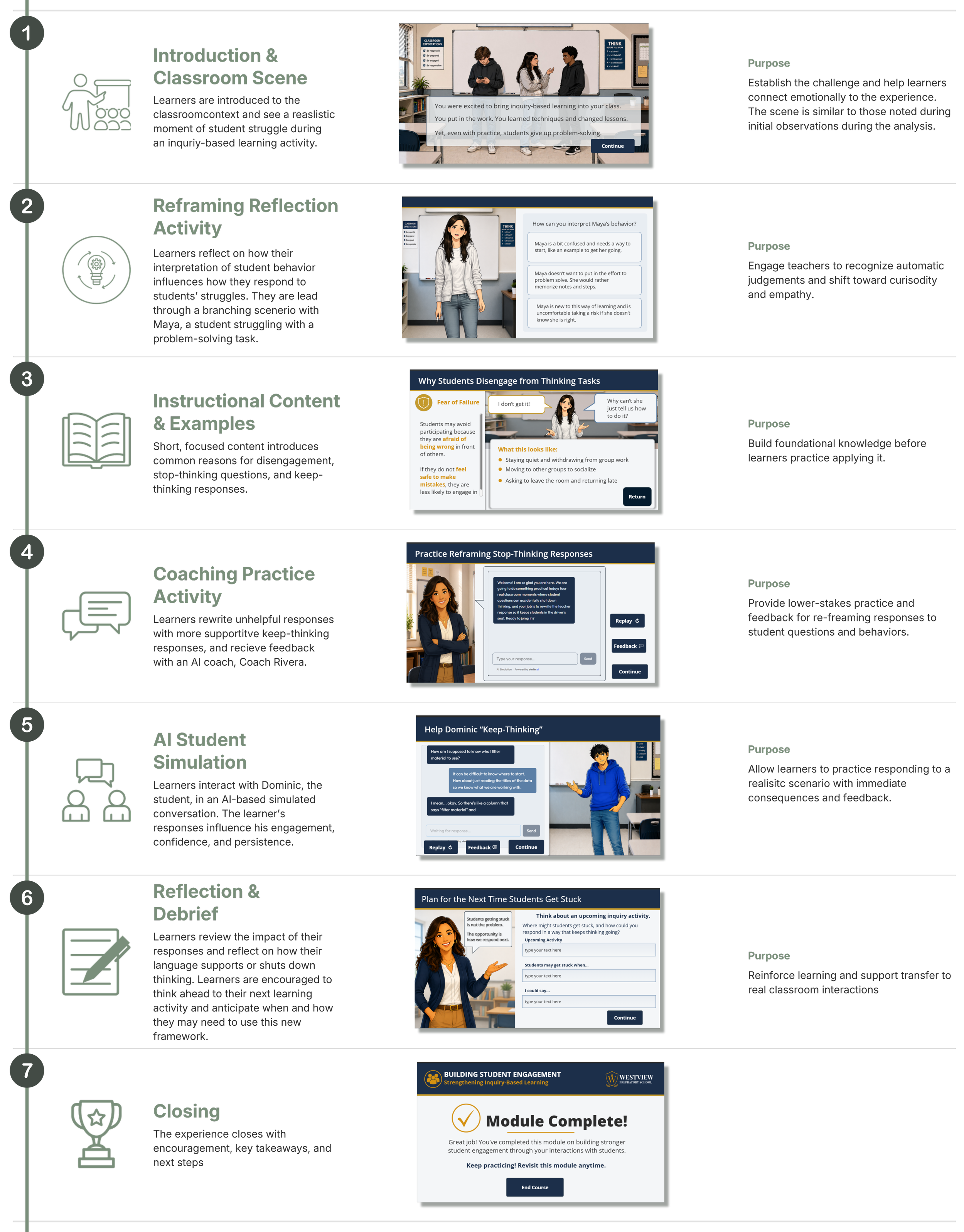
The module was designed to move learners through the same emotional and instructional progression many teachers experience during inquiry-based learning. Instead of beginning with theory or definitions, the experience starts with a realistic classroom moment to build empathy and establish the problem in a familiar context. From there, learners are guided through reflection, short focused instruction, low-stakes practice, and finally a more authentic student interaction simulation where they can apply what they learned in context.
Each activity was intentionally designed to build on the previous one. Early activities focus on reframing student behavior and recognizing how teacher responses can either support or shut down student thinking. Mid-module activities provide guided examples and coaching feedback so learners can practice without high pressure. The AI simulation was placed later in the experience so learners would have enough background and confidence before navigating a more open-ended conversation. The module ends with reflection and planning to help connect the experience back to real classroom practice and encourage transfer beyond the training itself.
The overall structure was influenced by scenario-based learning, action mapping principles, and inquiry-focused instructional practices. The goal was to create a learning experience that felt practical, supportive, and directly connected to real teaching challenges rather than overly theoretical or lecture-driven.