Building Student Engagement
Strengthening Inquiry-Based Learning through Your Responses
This project demonstrates my ability to design interactive, scenario-based learning that builds communication and coaching skills through realistic practice, feedback, and reflection.
Skills Demonstrated
Scenario-based learning design
AI-supported conversation practice
Feedback that encourages reflection and improvement
Interactive e-learning development in Storyline 360
Visual design and consistent branding
Application of adult learning principles
Realistic practice for workplace communication
While this project was designed for teacher professional development, the communication and coaching skills extend well beyond education.
The same approach could be used for leadership training, customer service, healthcare, onboarding, and other roles where people need to communicate effectively in the moment.
The Problem
A private school adopted a student-centered approach to encourage student motivation and independent thinking. While teachers understood the goals, putting the approach into practice was challenging.
Some students resisted taking more responsibility for their learning, which led to frustration for teachers, students, and parents. Over time, many teachers began returning to more traditional teaching methods, making it difficult for the new approach to take hold.
The Gap & Need
Teachers supported the shift toward student-centered learning, but many felt less prepared for the student frustration and resistance that came with it. They needed practical ways to support students without stepping in and doing the thinking for them.
Teachers needed practice learning how to:
Respond to frustration and disengagement
Keep students thinking through challenging tasks
Encourage persistence without giving away the answer
The school needed a practical training solution where teachers could practice these strategies in realistic classroom situations.
The Solution
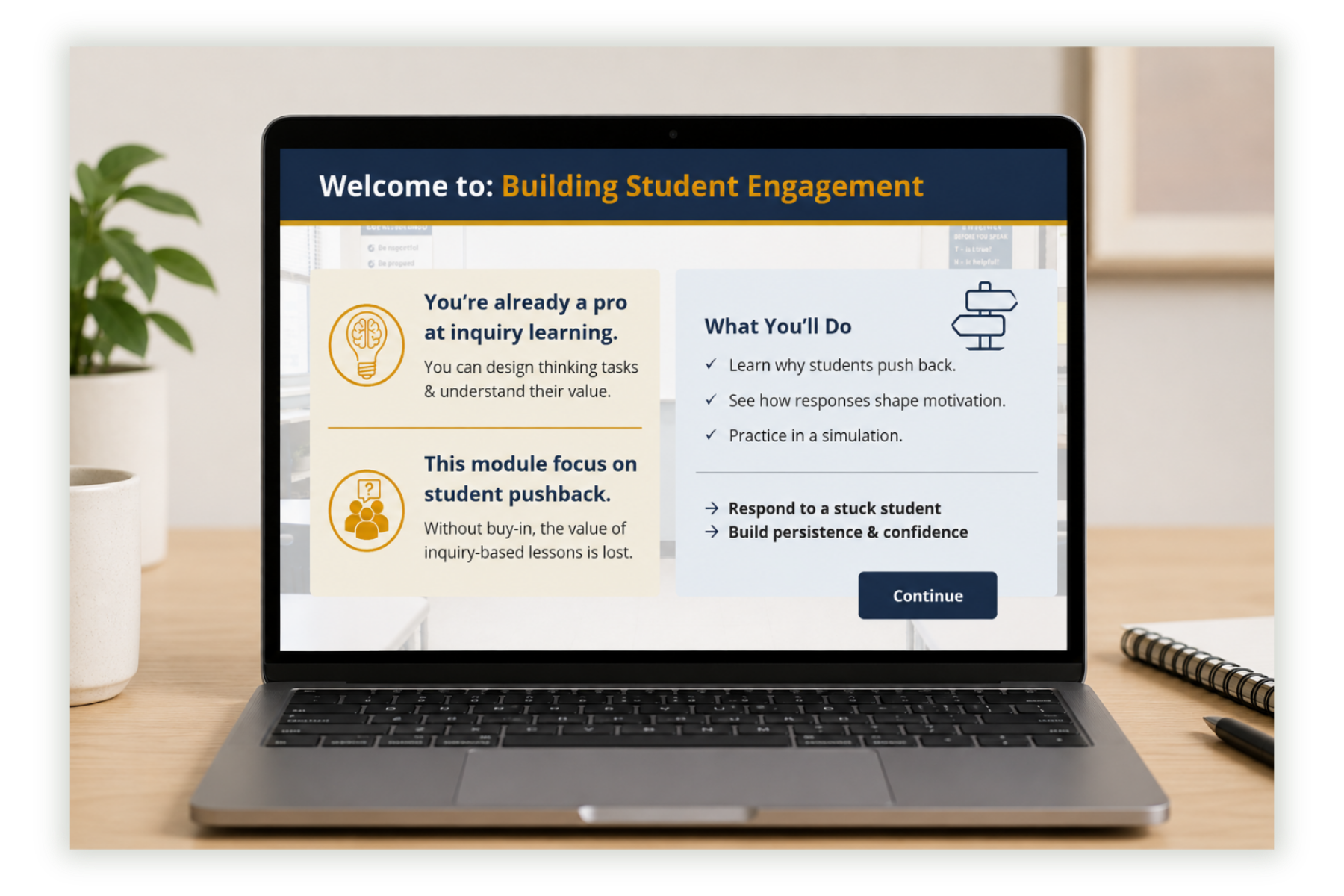
I designed an interactive professional development experience where teachers practice responding to students who become frustrated, disengaged, or overly dependent on teacher help.
Rather than just telling teachers what to do, the training puts them in realistic classroom situations where they can try different responses, see how a student might react, and reflect on their choices.
Key Features
Realistic classroom scenarios with different choices and outcomes
AI-powered practice conversations with simulated students
Mentor feedback and opportunities for reflection
Increasingly challenging situations as teachers build confidence
Practical strategies for encouraging independent thinking and persistence
The experience was built in Storyline 360 and designed to feel more like practice with a supportive coach than a traditional training course.

This project followed a structured instructional design process, drawing on both the ADDIE framework and SAM.
Process Overview