
Learning Activities
The learning experience is designed to feel like a typical day for a Customer Success Associate. Learners enter a customer call queue and work through realistic customer interactions.
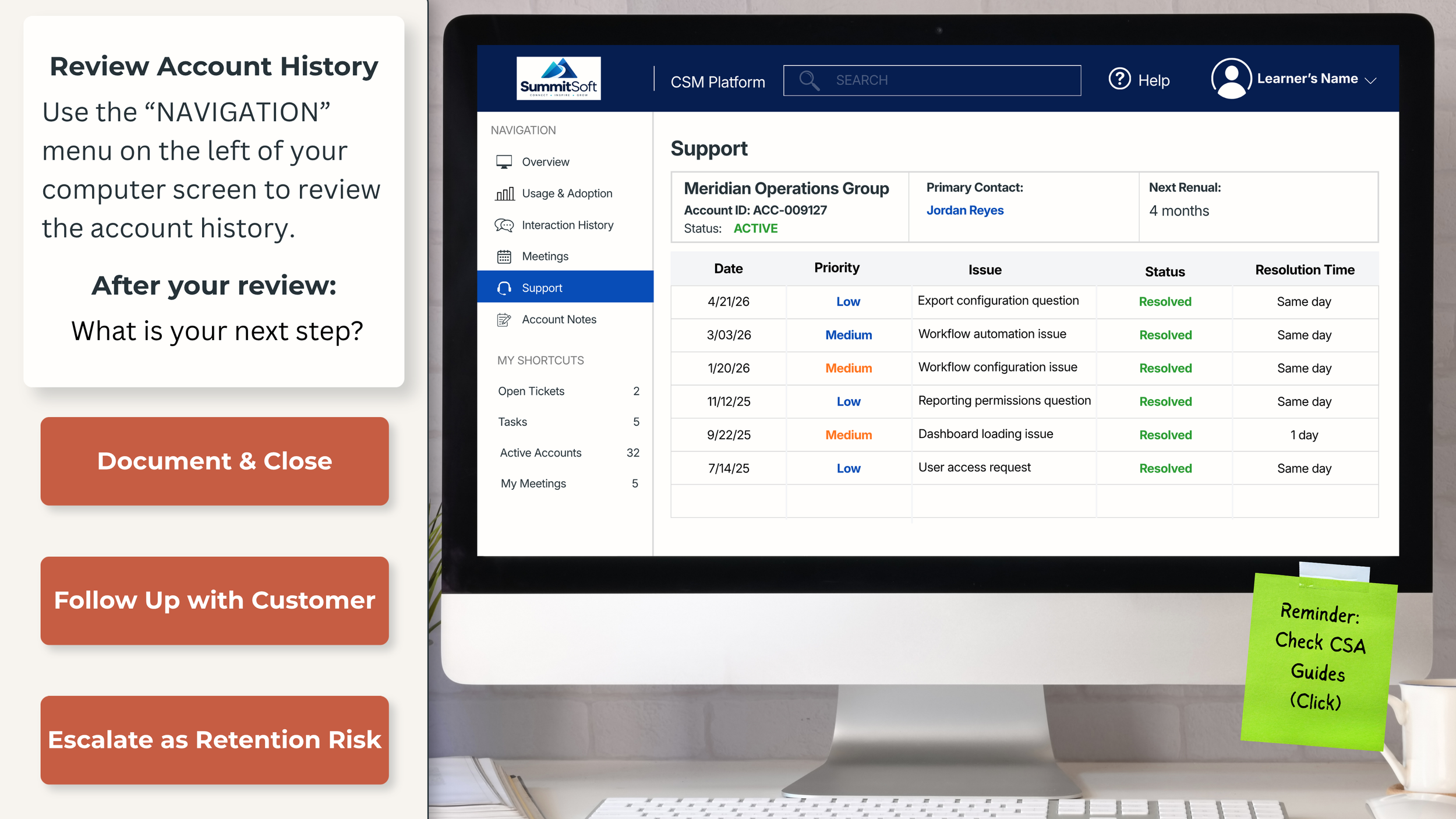
After each call, they decide what to do next: return to the queue, review the account, follow up with the customer, or escalate a concern. If they choose to investigate, they explore a simulated account system and decide which information matters before taking their next step.
Adult Learning Principles
Authentic practice: Activities closely reflect tasks learners will perform on the job.
Problem-centered learning: Learners solve realistic customer problems rather than simply studying content.
Experiential learning: Learners build judgment through making decisions and experiencing their consequences.
Situated learning: Skills are practiced within the context in which they will ultimately be used.
Learner autonomy: Learners decide how to respond rather than being led through a predetermined sequence.
Real Experiences,
Realistic Consequences,
Low Risk Learning.
This gives newer CSAs something traditional training can’t easily provide: experience making judgment calls without risking real customer accounts.
Learners can make mistakes, see the consequences of their decisions, and try different approaches before facing similar situations on the job.